

Bulgaria is one of the 3 countries – ‘white spots’ on the map of the European Union without an expert center for rare eye diseases
At the end of last week, we marked the International Day of Solidarity with People Living with Rare Diseases.
Rare eye diseases are the leading cause of visual impairments and blindness among children and young people in Europe. More than 900 rare eye diseases are known to date. All of them are essentially genetic and hereditary. They can manifest as standalone conditions, primarily affecting the ocular system and vision, or as syndromes involving other organs and systems.
The largest share among rare eye diseases is held by hereditary retinal degenerations, such as types of retinitis pigmentosa, Usher syndrome, Stargardt disease, Leber’s congenital amaurosis, and many others. Rare eye diseases also include numerous types of rare optic nerve diseases, congenital cataracts, childhood glaucoma and many other diseases of the anterior segment of the eye.
For the most part, these diseases are still incurable or very difficult to treat. In most cases, they progress chronically, advance, cause irreversible damage for now, and represent a serious burden for the affected individuals and their families.
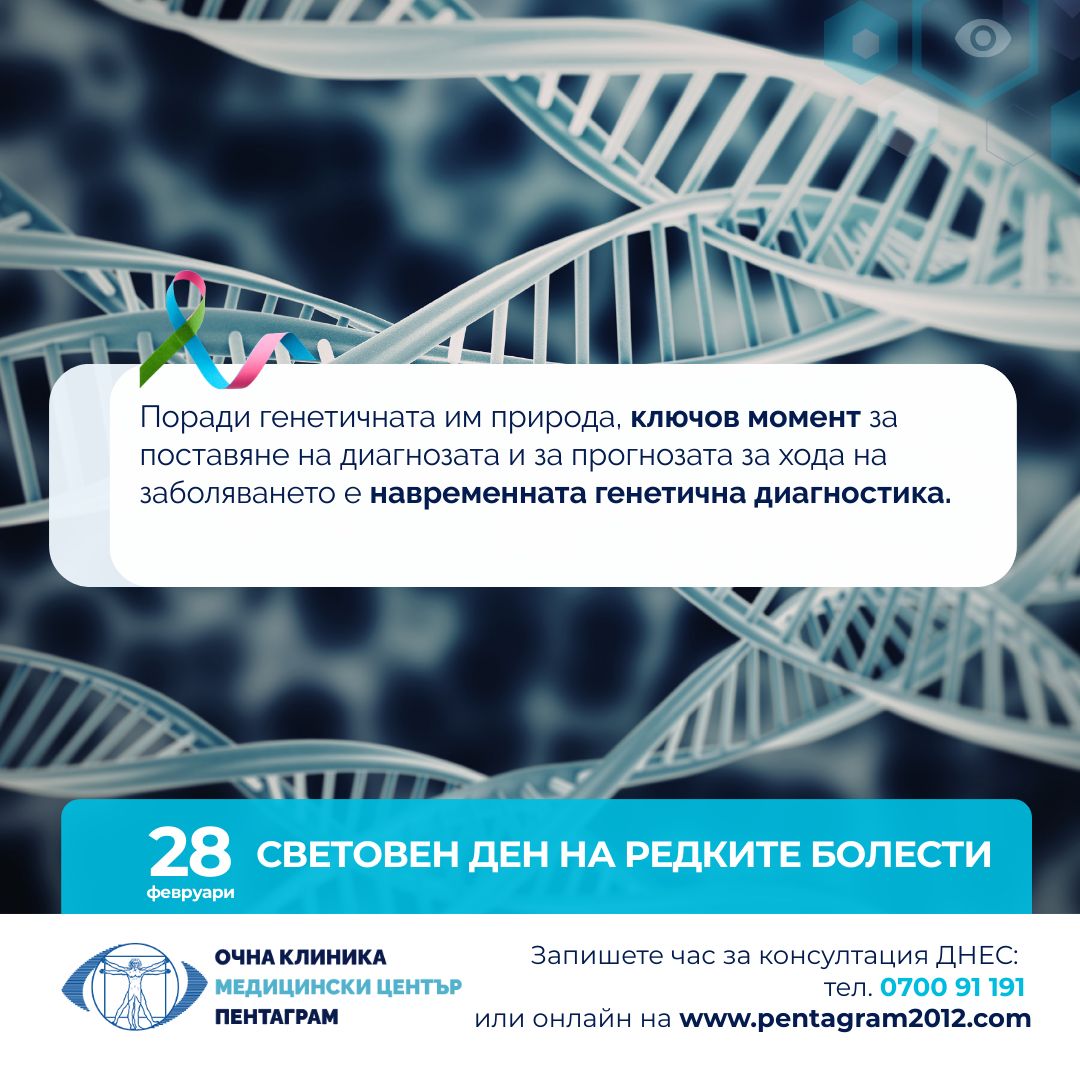
Due to their genetic nature, a key moment for establishing the diagnosis and predicting the course of the disease is timely genetic diagnostics.
For rare eye diseases, the same applies as for other rare diseases: Experience and knowledge about them are scarce, experts in the respective field are few within one country, and in many cases, there is no expert experience for certain diseases in a given country.
To improve care for people with rare diseases, there exists a European Reference Network for Rare Eye Diseases (ERN-EYE) that brings together nearly 60 clinics, approved by the European Commission as expert centers for types of rare eye diseases, located in 24 EU countries.
Unfortunately, Bulgarian patients, eye specialists, geneticists, and researchers do not have access to this network, as there is no reference center for rare eye diseases in Bulgaria. The absence of an expert reference center in Bulgaria condemns patients to wandering in search of a diagnosis and recommendation, lacking multidisciplinary care, lacking a second opinion that could be provided through ERN-EYE, and lacking the opportunity to participate in clinical trials, which are often the only way for patients to access developing treatments. The absence of Bulgarian specialists from the network hinders them from gaining experience and knowledge provided through the network, limits them from participating in various types of studies, from developing clinical guidelines and consensus, and from having the opportunity to care for their patients in the best possible way.

Dr. Petya Stratieva, founder and chairperson of the Association “Retina Bulgaria”“Among the issues that have long awaited resolution is the highly mediated access to the much-needed genetic diagnostics for patients with rare eye diseases. For children, this diagnostics is mostly covered by public funds, but for adults, the possibility is that patients pay for it themselves from whoever and wherever it is offered, which does not guarantee diagnostics according to standards,” says Dr. Petya Stratieva, founder and chairperson of the Board of Retina Bulgaria Association. She explains that often the patient receives a result from their genetic test, which they could not interpret independently in any way. “An expert center, for which there is already potential in our country among medical specialists and geneticists, could provide continuous multidisciplinary care for patients, including guiding them towards suitable habilitation or rehabilitation,” adds Dr. Stratieva.
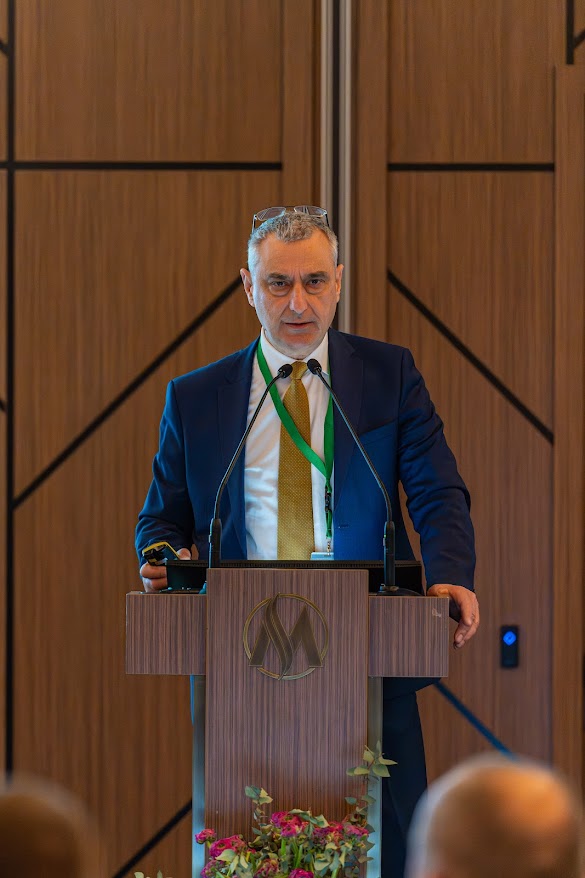
Dr. Veselin Daskalov, manager and chief eye surgeon at the Specialized Eye Clinic “PENTAGRAM”“Currently, patients with rare eye diseases receive adequate ophthalmological assistance from our specialists, but they are subjected to the hardships posed by our healthcare system and the capabilities of the NHIF,” explains Dr. Veselin Daskalov, manager and chief eye surgeon of the Specialized Eye Clinic “PENTAGRAM”. He adds that specific genetic tests for rare eye diseases are currently not covered by the NHIF. They can be conducted at university eye clinics and some private clinics, but the major issue is that diagnosing these diseases is usually interdisciplinary. “That’s why I believe that through the Ministry of Health, BOS (Bulgarian Ophthalmology Society), university eye clinics, and reference genetic laboratories, we should unite our efforts to synchronize our activities and create a specialized center for these diseases. So that the patient can receive timely and accurate diagnosis and appropriate treatment, when necessary,” concludes Dr. Daskalov.

Dr. Vesselin Daskalov: Computer Syndrome is the Modern Eye Disease
More and more people spend a large part of their day in front of computers, phones, and tablets. This directly.
Read More
5 Symptoms That Signal a Problem with the Thyroid Gland
The thyroid gland is a small but extremely important organ that regulates metabolism, heart activity, and many other processes in.
Read More