

Dr. Veselin Daskalov on Darik Radio: No later than 1-2 years, the things introduced in Europe come to Bulgaria as well
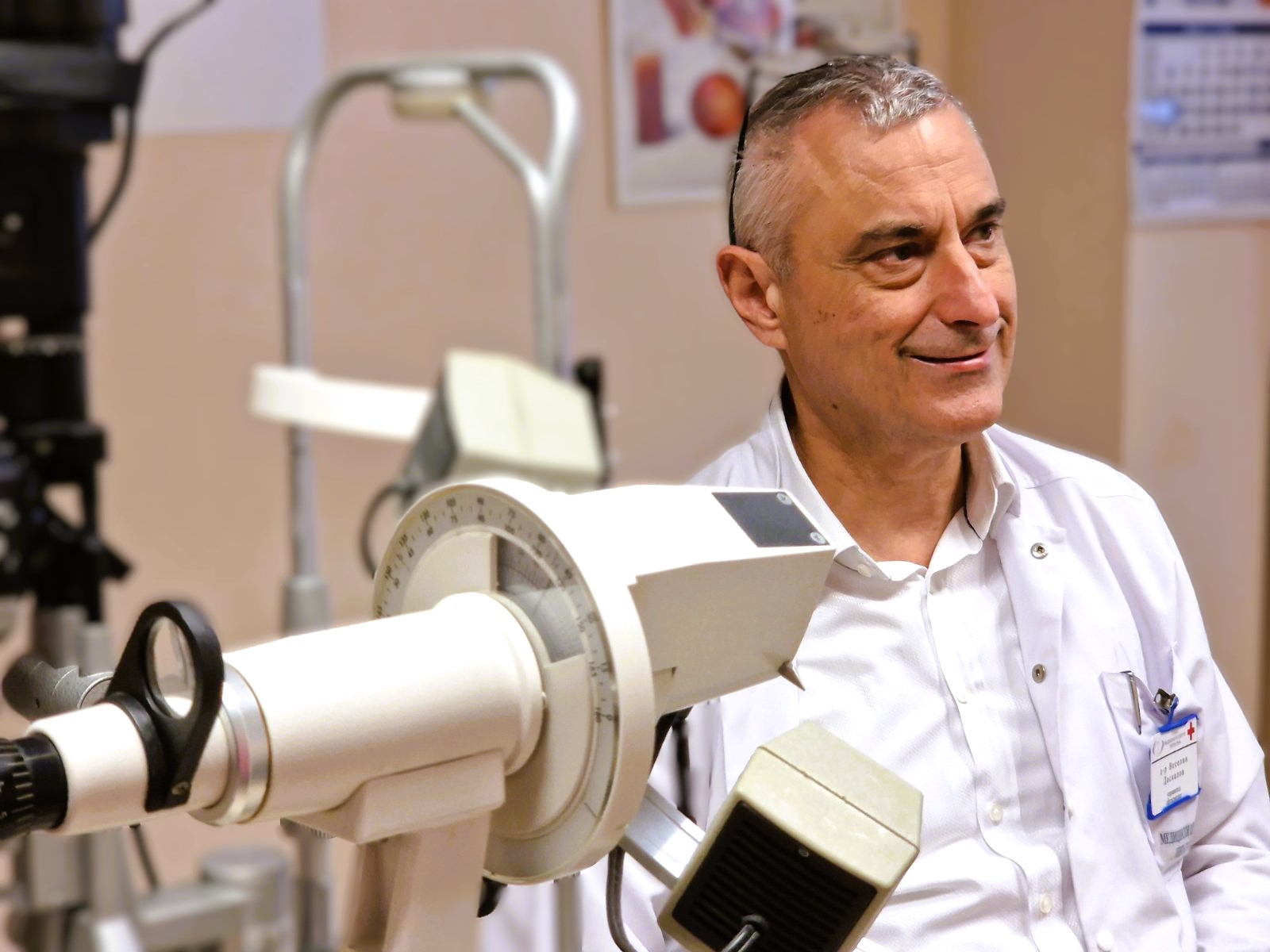
The specialized eye hospital ‘PENTAGRAM’ is focused on treating adult patients over the age of 50, as well as elderly individuals.
Dr. Daskalov, for nearly a year now, the specialized eye hospital ‘PENTAGRAM’ has been in a new building. Besides the building, what else is new with you?
The new building allows us much greater opportunities. It can be said that we are now able to offer comprehensive eye health care – from precise diagnostics using the latest generation equipment to effective conservative, surgical, and laser treatment of a variety of ocular diseases.
We have a modern surgical block with four operating rooms, an anesthesiology cabinet, a room for preoperative preparation, and postoperative care.
The specialized diagnostic and functional offices are equipped with the latest generation of equipment, enabling precise diagnostics and treatment of accommodation disorders, cataracts, glaucoma, retinal detachment, intraocular hemorrhages, and foreign bodies in the eye.
We have eye offices with separate equipment for OCT, yag, and alc lasers, perimetry, as well as Fluorescein angiography and angiography.
More than six months ago, we also opened a specialized pediatric eye office thus offering quality ophthalmologic care for all ages. Additionally, in the medical center attached to the clinic, there are offices for Ophthalmology, Obstetrics and Gynecology, Endocrinology и Cardiology. We also have a well-equipped in-house laboratory.
Let’s talk about vision at different ages, for example, in children. What are the most common diseases among them?
In childhood, especially shortly after birth, various congenital diseases are encountered – congenital cataracts, congenital glaucoma. Very often, grandparents admire the large eyes of their grandchildren, only to discover after a month or two that they are suffering from congenital glaucoma. A significant condition that has become very common is retinopathy of prematurity. Fortunately, this disease is causing less and less damage to the eyes, as our neonatologists now treat these babies much more gently.
What kinds of problems do people most commonly come to ‘PENTAGRAM’ for treatment?
We are primarily focused on the treatment of diseases related to mature age, after 50 years, and elderly people. Most of our patients have presbyopia (so-called age-related farsightedness) for glasses correction. This is the moment to point out that it is not a disease but a refractive anomaly associated with age and biology. All of us, at a certain age, start to wear reading glasses, while nearsighted people stop wearing theirs.
We also have many diabetics, as we address the effects of diabetes on the eyes.
We have many patients with cataracts, which is among our main areas of focus. Additionally, we treat patients with glaucoma – we are one of the few who perform glaucoma surgeries. Until a year ago, we were the only ones using a very good implant for treating this condition, a small tube that entered Europe in 2021, and just six months later, we began using it with great success. This is about the Preserflo implant, which is a shunt that reduces intraocular pressure. It channels the fluid from the anterior chamber of the eye into the subconjunctival space, providing a much longer-lasting effect than the classic glaucoma surgery.
Refractive surgery is also a significant area for us. These are patients with positive or negative diopters and astigmatism, which we correct quite successfully. It can be said that our patients forget about wearing glasses. And it’s not just the young patients who have and wear glasses but also older patients after cataract surgery. The types of intraocular lenses have changed significantly. Now we have several types, besides monofocal lenses—lenses with extended focus that help us avoid glasses when we use a computer, lenses for seeing near, far, and on the computer, the so-called trifocal lenses. Technologies in these have advanced greatly, with fewer side effects, and the convenience for patients is substantial.
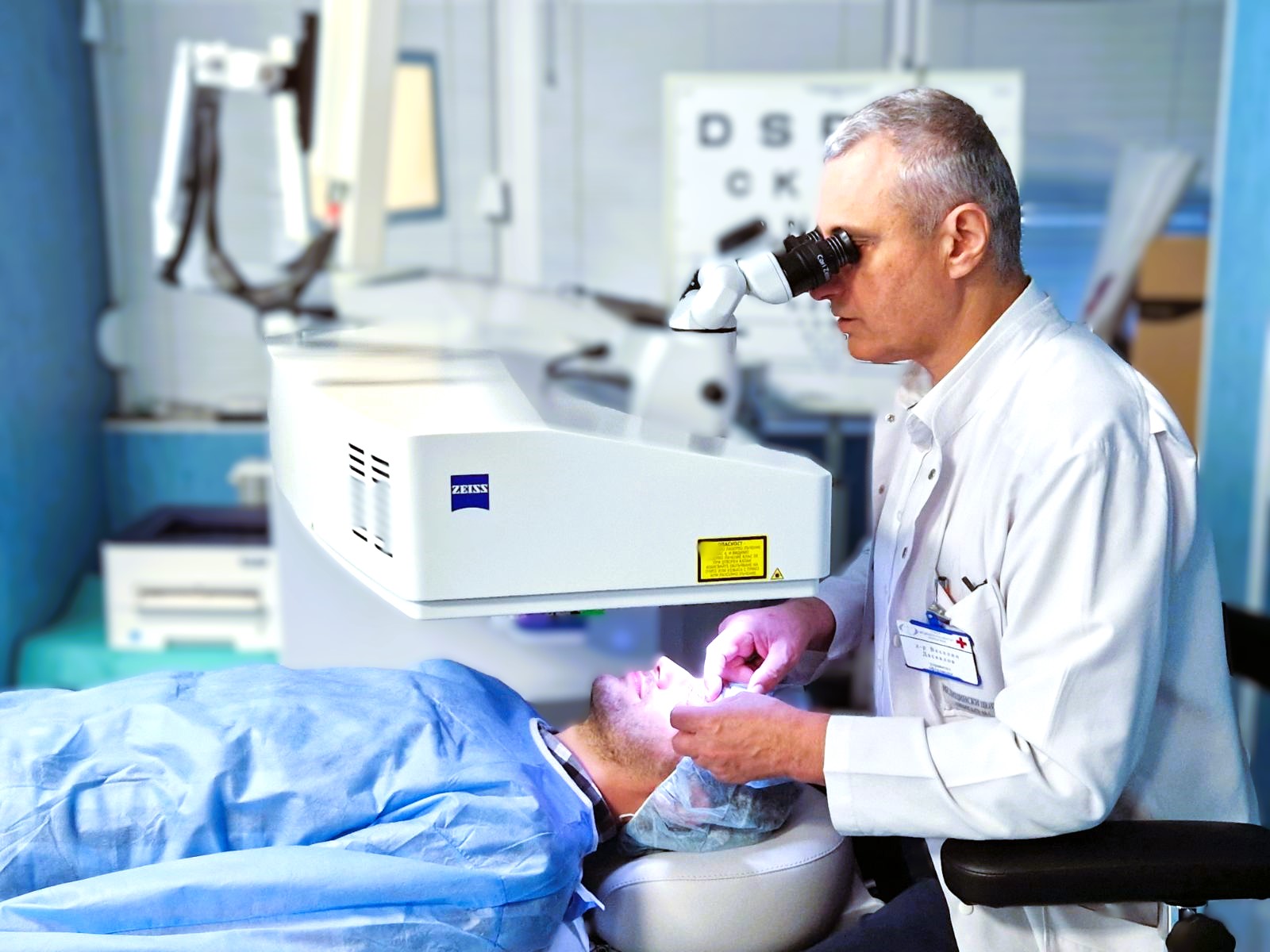
Is it true that with the new technologies at your clinic, three diopters of farsightedness can be corrected in four seconds?
Yes, with the latest laser we have from Zeiss, one of the fastest in the world for correcting nearsightedness и and farsightedness, this is entirely possible. In one second and one or two tenths, we correct one diopter.
Is the recovery process difficult?
I wouldn’t say so. Patients with diopters up to 6 achieve 90% of the expected vision within the first 12 hours.
From the implant you mentioned, which appeared in the West and half a year later was already available here, I infer that our ophthalmology is now at a European level. Is that so?
We are up to date with everything happening there, and no later than 1-2 years, the things introduced in Europe also come to Bulgaria.
What struck me at the opening, which I had the honor to host, was the highly collegial attitude. Among your guests were many big names in Bulgarian ophthalmology.
We work together. As much as my ego may be big, we help each other. Everyone specializes in a particular field. For example, Prof. Chernodrinska is strong in pediatric ophthalmology, especially in strabismus, but pediatric cataracts require a somewhat different approach. Prof. Cherninkova, our renowned neuro-ophthalmologist, excels in diagnosing double vision. We also often encounter such patients. It often happens that patients, after cataract surgery, who previously had latent strabismus, develop double vision after the cataract is removed. We ophthalmologists are a whole. We cannot and should not divide, but we must work together and collegially.
Source: “Niki Kunchev Show”, Darik Radio
Program’s author: Niki Kunchev

Pentagram Eye Hospital Announces Free Ophthalmological Examinations on July 4 and 5, 2025
Free ophthalmological examinations will be conducted on July 4 and 5, 2025 (Friday and Saturday) at the new building* of.
Read More
Dr. Vesselin Daskalov: Computer Syndrome is the Modern Eye Disease
More and more people spend a large part of their day in front of computers, phones, and tablets. This directly.
Read More